

Application retirement means decommissioning legacy systems while preserving the data they contain. This allows organizations to immediately reduce infrastructure, licensing, and maintenance costs, while still ensuring secure access to historical and compliance-relevant information.
Reduce costs. Lower risk. Retain control of your historical data.
Many core business applications were implemented decades ago. They once powered critical operations, but today they create more challenges than value.
Yet they continue to consume budget, infrastructure, and IT resources. The result? Rising costs, increasing cyber risk, and a more complex IT landscape that slows innovation.

Even when a system is no longer used operationally, the data it contains remains business-critical. Deleting the system without a strategy risks data loss, compliance breaches, and operational disruption.

Keeping a legacy system “just for access” may seem harmless. In reality, it creates continuous operational and cybersecurity risk. The underlying technology stack still requires ongoing care:
When vendors end support, critical cybersecurity updates are no longer available or technically compatible with the old architecture. As a result, these systems cannot simply “sit safely” as archives - they become progressively harder to secure, increasing exposure and operational risk over time.

Modern analytics and AI initiatives rely on long-term, trustworthy historical data. In many organizations, exactly this data is still locked inside outdated systems that are expensive and risky to maintain.
Why is legacy data critical for AI?
Kyano Datafridge enables secure, controlled decommissioning of legacy systems while preserving seamless access to historical data.
Legacy data is migrated to a compliant, cost-efficient archive – where it remains fully accessible for audits, reporting, analytics, and AI initiatives. Users can retrieve and analyze information through familiar SAP GUI–based display transactions, as if the original system were still running.
You switch off the systems – but not the data.
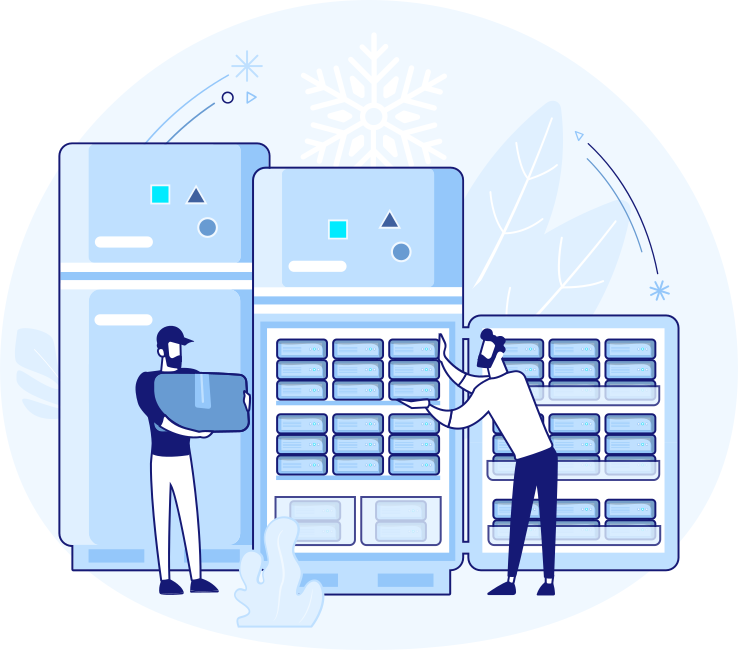
From the start, the collaboration with SNP felt straightforward and reliable. The team was always available when we needed them, while Kyano Datafridge worked exactly as expected – it allowed us to move the legacy data to a more cost-efficient and secure setup. The combination of strong teamwork and a well-designed solution made the transition smooth for both IT and business users.
Aurelien Nourry
ERP Projects Coach, TotalEnergies Global IT Services


| Active archiving | System decommissioning | |
|
Purpose |
Reduce data volume in active systems |
Retire a legacy system completely |
|
Scope |
Move inactive data to an archive |
Extracts all data and shut down the system |
|
Use case |
Improve performance and control growth |
Eliminate obsolete applications |
|
Example solution |
Application retirement is the controlled decommissioning of outdated or unsupported systems while preserving their data for compliance, reporting, and analytics purposes.
Legacy systems often contain legally required historical data. Deleting them without a structured plan risks compliance violations, data loss, and business disruption.
Rising maintenance costs, increasing cybersecurity exposure, growing IT complexity, and limited accessibility of valuable historical data.
It moves historical data from locked legacy systems into secure, accessible environments, making it reliable for analytics and AI model development.
Timelines vary depending on system size, complexity, and regulatory requirements. A structured approach minimizes disruption while maintaining continuous data availability.
Beyond regulatory assurance, you lower costs, reduce risk, simplify your IT landscape, and unlock strategic value from historical data.

Our end-to-end data management and migration platform Kyano can make your decommissioning and archiving processes quick and compliant with thanks to our automated processes and guided procedures.